Vibe coding joins the enterprise: our interview on TechBusiness
Nov 24, 2026 · @Nunzio Fiore
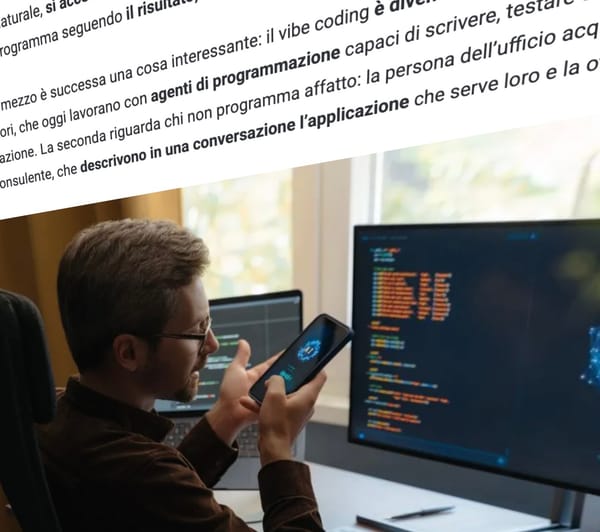
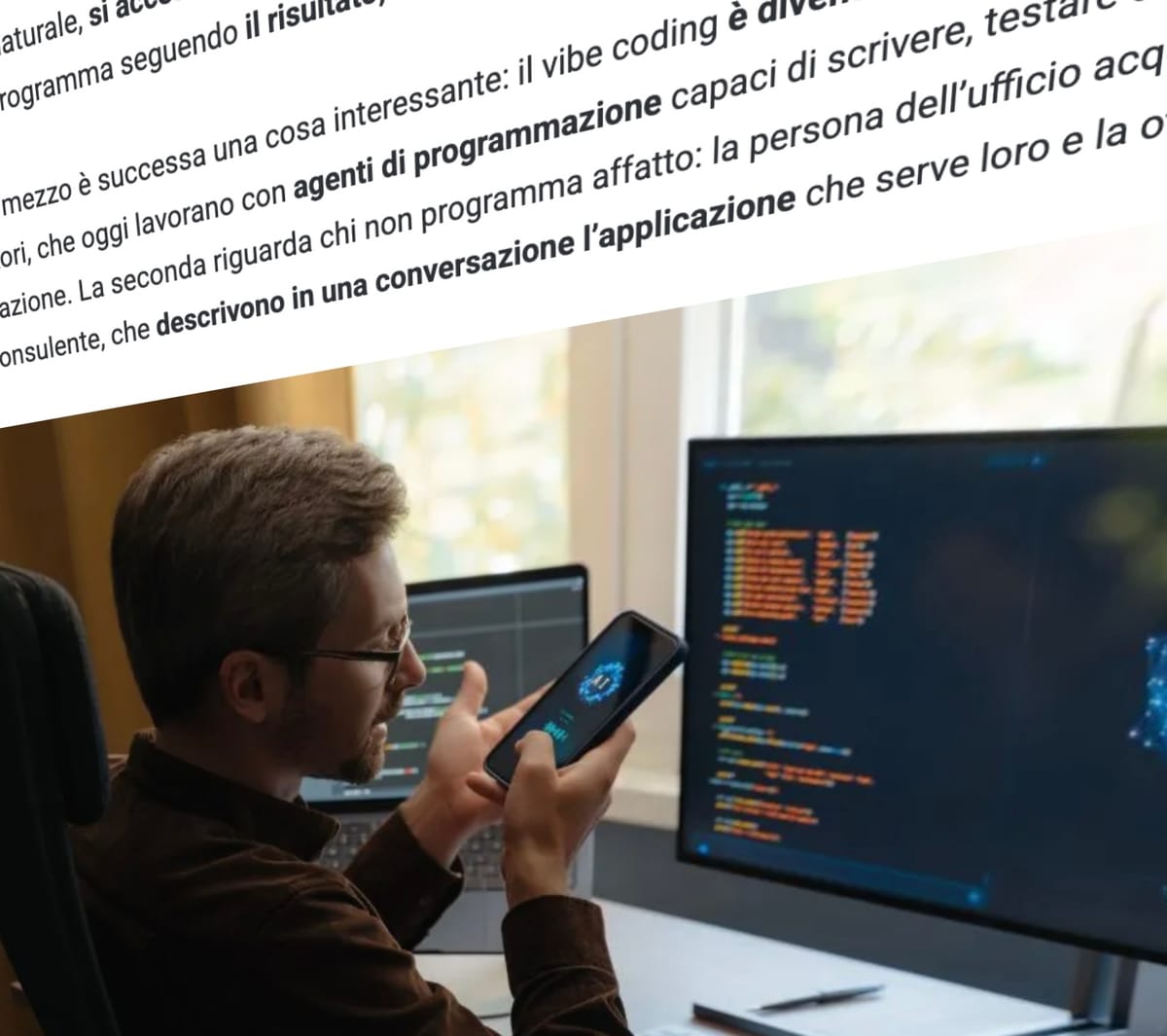
TechBusiness has published an interview with Nunzio Fiore, founder and CEO of Memori, on vibe coding in the enterprise. The editorial team wanted the point of view of someone who uses vibe coding every day, including inside their own organization, to understand how it is governed and what obstacles come up.
The result is a map of four challenges: credentials, verification, accountability and training. The full interview is here: Vibe coding in the enterprise: interview with Nunzio Fiore of Memori.
In this article we revisit those four points in our own words, and explain how we tackle them in our day-to-day work.
The person who writes the code is changing
In its pure form, vibe coding is simple to describe: you ask a model to write the software and you accept the result without reading it. For a personal prototype that may be enough. In a company, where that software touches real data, customers and systems, it is not.
In the interview Nunzio sums it up like this: "Vibe coding changes who writes the code." That is the starting point. Writing shifts from programmers to the people who know the process: those working in administration, quality, the technical office. They are the right people to build, because they know what is needed. The risk arises when they build without boundaries.
That is why our position is always the same: vibe coding enters the company when those who build know where the keys are, and the one who decides remains a person.
The four challenges, as we read them
- Credentials. Someone building an application by talking should never handle passwords and access keys, and the model should never see them. Credentials must live in a single, protected place that uses them on the agent's behalf.
- Verification. A model tells a good story, even when it is wrong. For us, an action has not happened until there is independent proof that it did. And the numbers a person reads on screen must come from the real data, not from generated text.
- Accountability. Each tool has its own permission, you start read-only, and preparing a draft is not the same as being able to send it. At the steps that matter, a person decides, and a record remains of who authorized what and when.
- Training. People in the departments must learn to build and to recognize the limits of what they build. And there is a question that concerns the youngest: what do they learn if the model writes the code? Passing on knowledge takes time, and it is an investment, even when it seems faster to do it alone.
The first three challenges are solved with architecture. The fourth is solved only with people, and it is the one that usually gets postponed.
How we do it with AIsuru
In AIsuru, it is the agent that does the vibe coding, within a boundary set by the company. The person describes what they need, and the agent builds it by composing parts that are already programmed and verified.
- Credentials stay in the gateway. The agent uses company systems without knowing passwords and keys, and every operation carries the identity of whoever requested it.
- Screens are programmed, not generated. Applications created with AIsuru Vibe Coder show data read from the database every time they are opened.
- Permissions are granted tool by tool. The administrator decides what each agent can read and what it can write, and the company's rules apply to all agents.
- Changes are approved by a person. The agent proposes improvements to itself, the owner approves or rejects them, and every change can be undone.
- It starts with training. With the Academy, people learn to build agents before putting them to work on a real process.
On top of all this there is a third-party certified management system, including the ISO/IEC 42001 standard on artificial intelligence management. The documents are at trust.memori.ai.
Read the interview
The interview also includes a question on how vibe coding will change over the next two or three years. We leave the answer to those who want to read it in full on TechBusiness: Vibe coding in the enterprise: interview with Nunzio Fiore of Memori.
Thanks to the editorial team for the space and for the questions.
To see AIsuru Vibe Coder at work on your own process: demo@memori.ai, subject DEMO SUITE.