AI Agents in the Enterprise: Governance, People and Real-World Cases from the Memori Workshop at FARETE 2026
How do you go from experimenting with artificial intelligence to an organization where people and agents work together? At FARETE we opened our platform and shared the processes we are transforming, our governance choices and the work on skills.
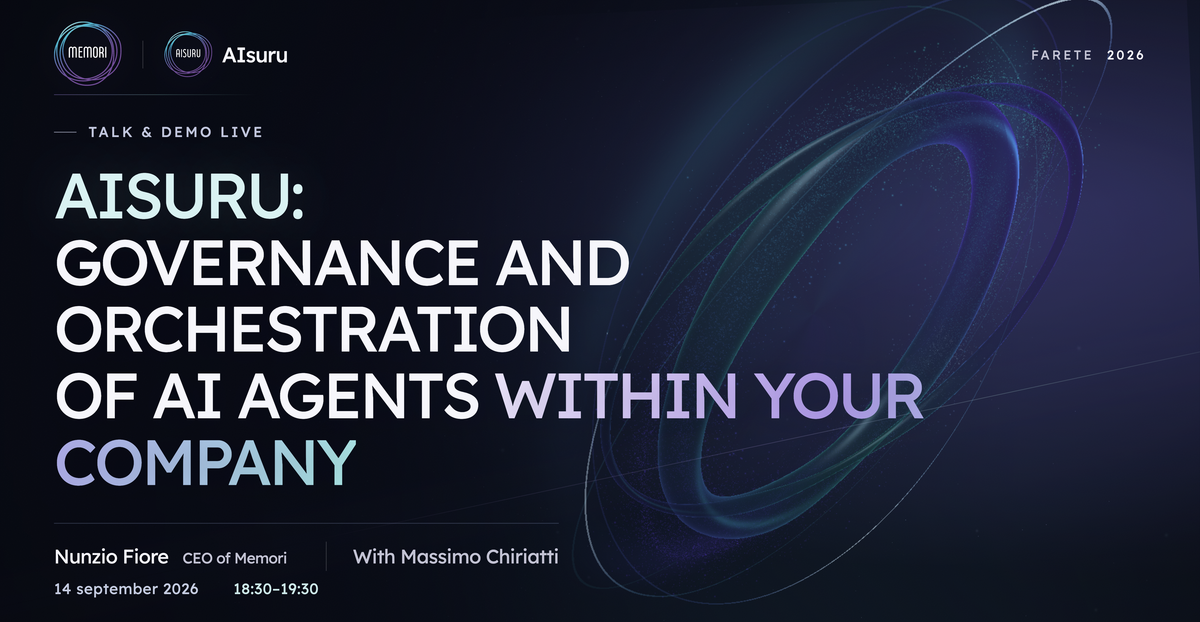
How do you go from experimenting with artificial intelligence to an organization where people and agents work together? At FARETE we opened our platform and shared the processes we are transforming, our governance choices and the work we are doing on skills.
«I've fixed it, try again.»
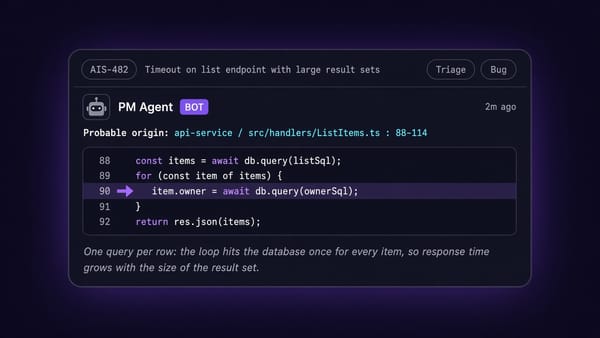
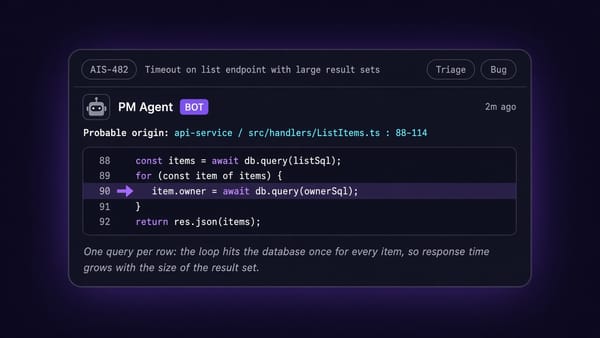
This is an answer that can close a support ticket. But what does it leave behind for whoever has to face the same problem tomorrow? What knowledge can a newly arrived colleague or an AI agent tasked with supporting them draw from it?
During our workshop at FARETE 2026 we arrived at this question too. Because bringing agents into a company means engaging with how we work: how we describe a problem, where we store information, who decides, and how we make experience reusable.
On September 14th, at the workshop «AIsuru: governance and orchestration of AI agents within your company», Nunzio Fiore, CEO of Memori, guided the audience through this journey together with Massimo Chiriatti, Mattia Bergami and Michele Parigi. We brought together the theme of technological sovereignty with platform demonstrations and the use cases built by our team.
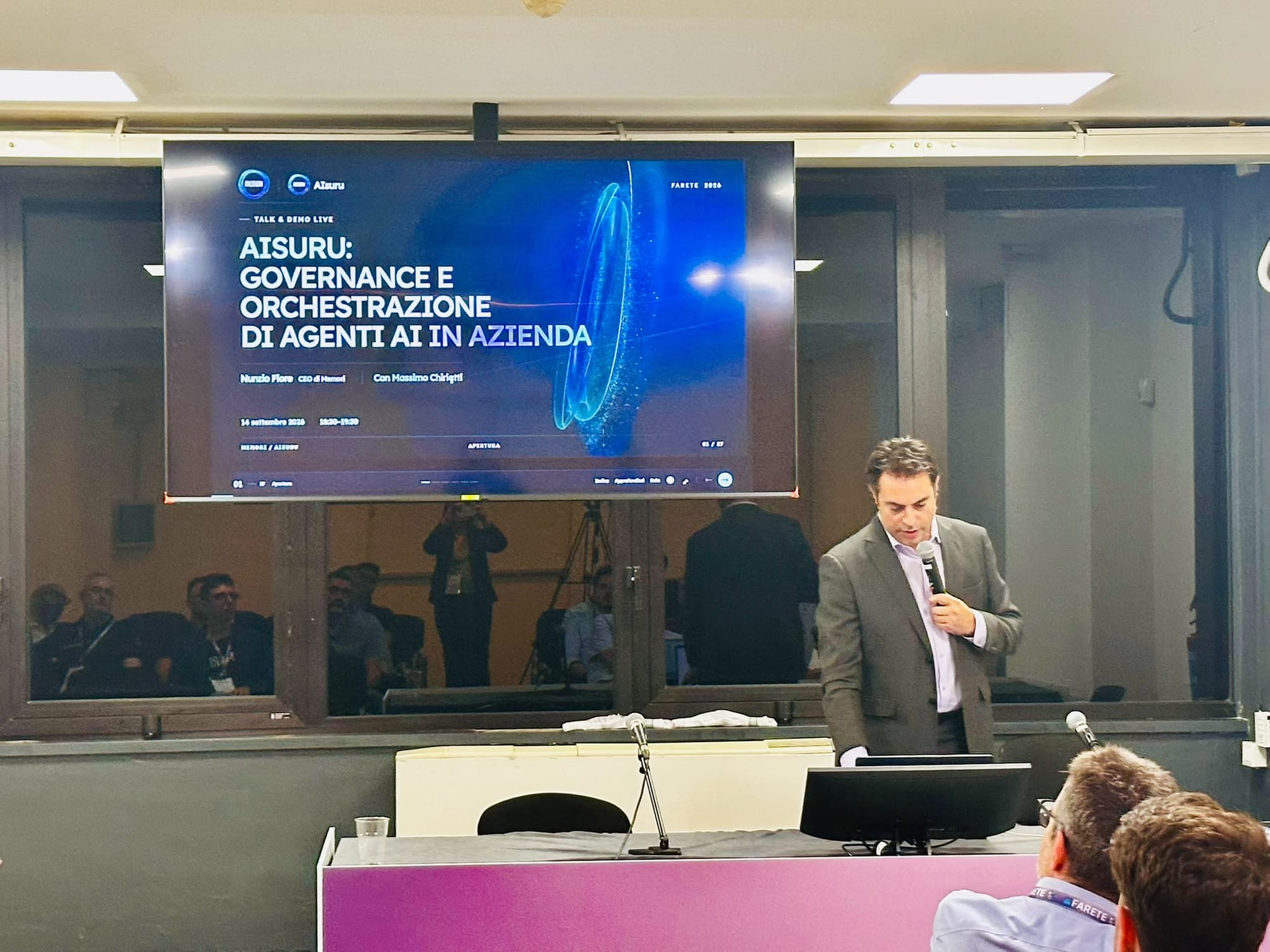
The common thread is the Human + Agents model: expanding people's operational capacity by precisely defining the work of agents, their sources, their tools and the responsibilities of those who use them.
Memori: from company knowledge to agents in processes
Memori was founded in 2017 in Altedo, near Bologna. Since then we have been working on artificial intelligence and on the possibility of making knowledge accessible and usable through conversation.
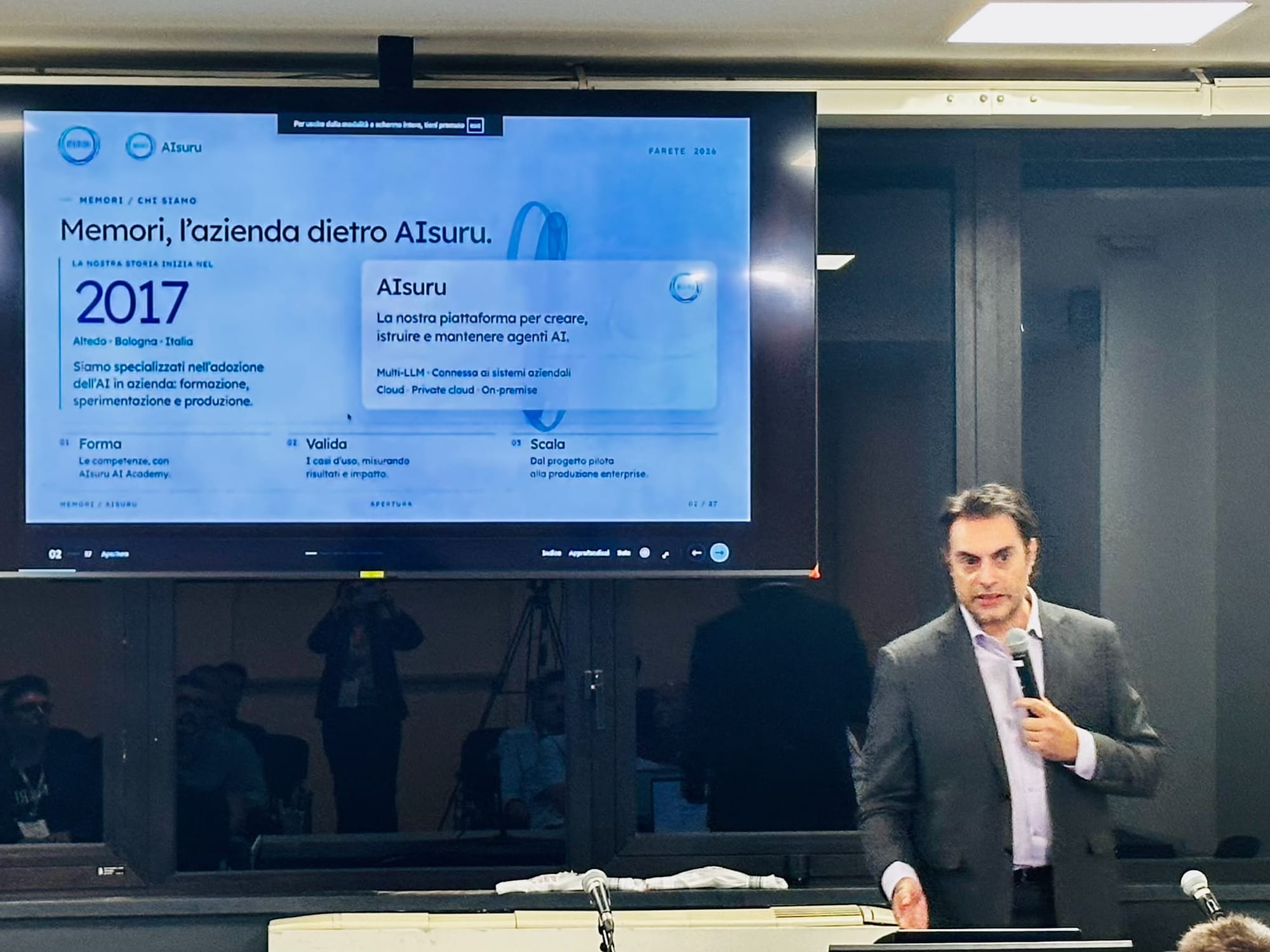
Today this journey takes shape in AIsuru, the platform used to create, train and maintain AI agents connected to company documents, data and systems. Instructions define the task; sources provide context; integrations enable the actions required by the process.
Our method holds together three steps: train, validate, scale. Skills are developed, concrete use cases are verified, and the transition to production is supported. AI Creators work alongside companies in building and evolving agents, working with those who know the activities to be transformed.
It's a journey that involves different organizations. The materials presented at FARETE gather experiences and collaborations with companies such as LCS Group, WIIT, TECNE, EXM, Gruppo E, soul-k and TreCuori, with FAV and Confindustria Emilia Area Centro, and with universities including Bologna, Cattolica del Sacro Cuore, Politecnico di Torino, Pavia and Politecnico di Bari.
The areas range from university orientation to administrative support, from industrial maintenance to member services. Alongside these are technology partnerships with Lenovo and NVIDIA, and a distribution partnership with TD SYNNEX. Skills, product and infrastructure all work toward the same goal: bringing AI into the real context of the organization.
The shared framework for the event reported 13 universities active on AIsuru and 30 agents across universities. For Confindustria Emilia Area Centro, the materials described a hub with 250 companies involved and three agents dedicated to AI governance, NIS2 and preferential origin. These are examples of how the same platform can support specialized services for different communities and needs.
What makes a model a corporate agent
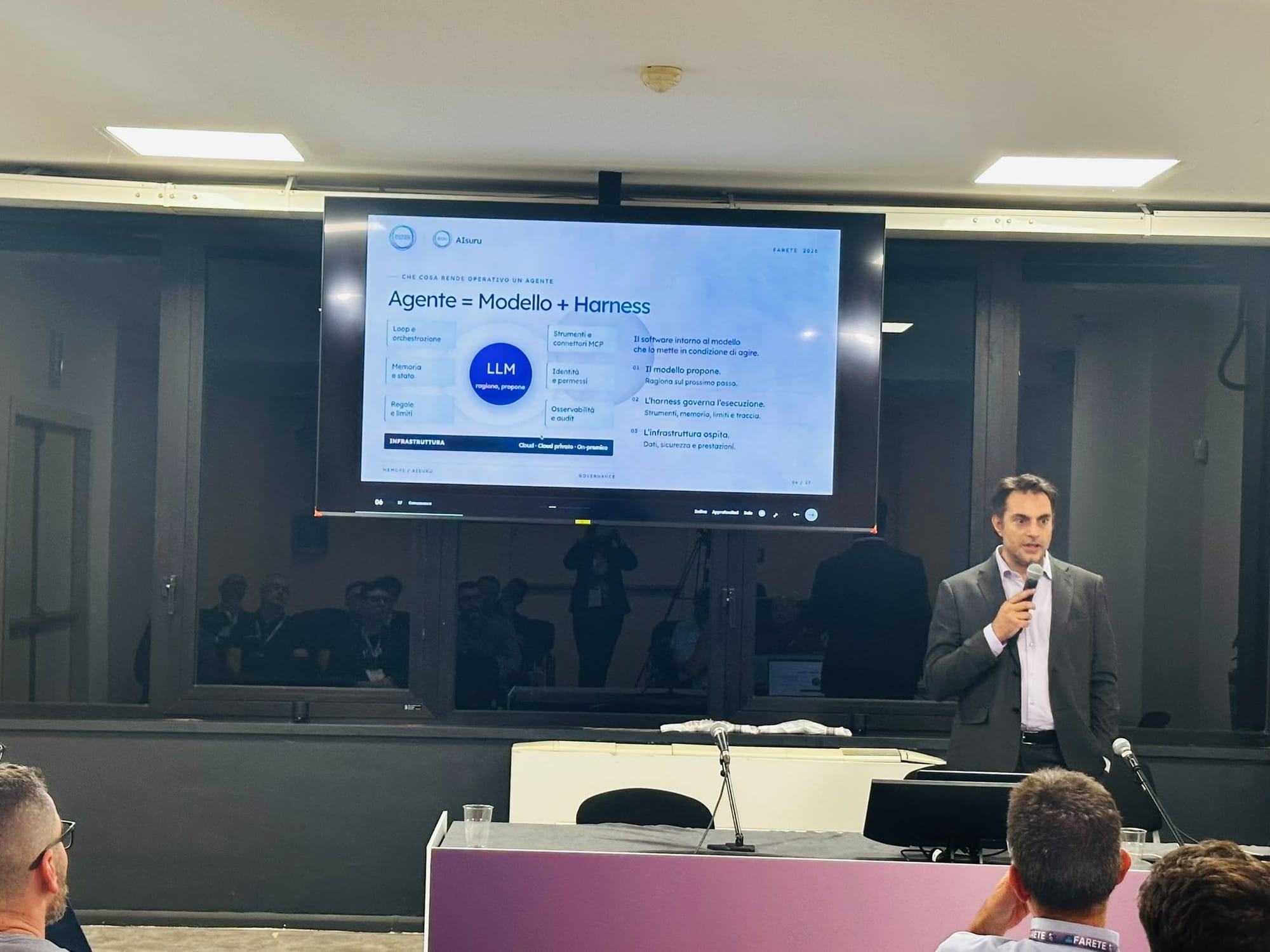
Agent = Model + Harness.
In the workshop we used a simple formula: Agent = Model + Harness.
The language model contributes to reasoning, interprets the request and proposes next steps. The harness is the software that organizes the work around the model and puts it in a position to operate.
It includes six dimensions:
- Orchestration: the sequence of activities, checks and any contributions from other agents.
- Tools and connectors: access to the sources and operations needed for the task.
- Memory and state: the context to be preserved and the progress of the work.
- Identity and permissions: who can use the agent and which actions are allowed.
- Rules and limits: the required behaviors and the steps reserved for people.
- Observability and audit: the information useful to understand what happened and improve the process.
The infrastructure hosts this system and helps define its performance, security and data location.
This distinction changes how a project is evaluated. Beyond the model's capability, one must verify whether the agent has the correct information, can use the appropriate tools, and returns a result that can be checked. Two agents based on the same model can work differently because the system built around them is different.
AI sovereignty: knowing your dependencies and keeping room to choose
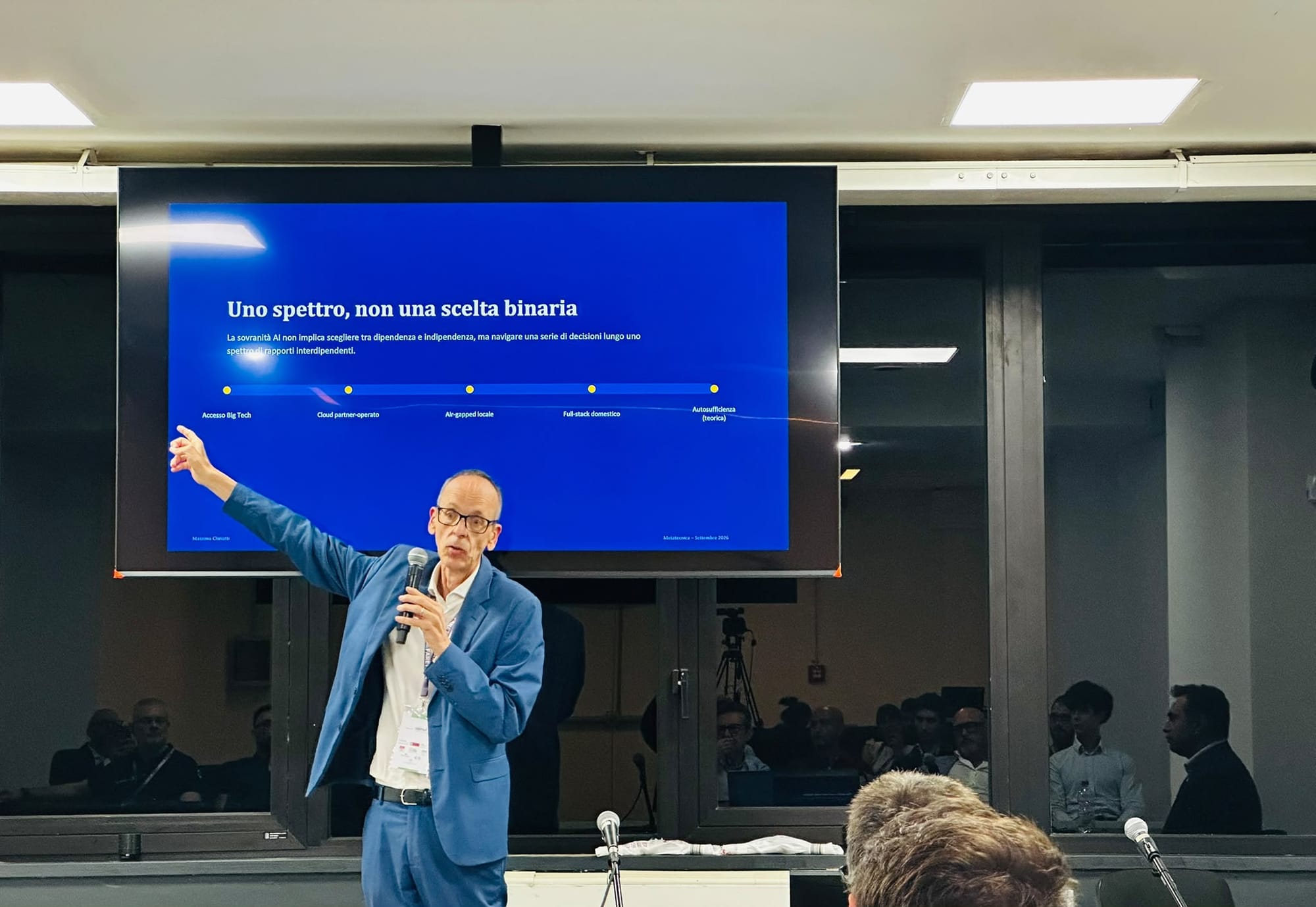
Massimo Chiriatti opened the discussion by drawing attention to the entire technology chain: hardware, cloud, software, models and data.
His proposal is to read sovereignty as a spectrum of autonomy. An organization can better understand its own dependencies, reduce the most critical ones and build viable alternatives, while maintaining competitiveness and the ability to innovate.
Dependency on a vendor can be technical, economic, and also tied to people's habits. Changing a system involves migrations, new integrations and training. This is also why AI governance involves company management and finance alongside IT: service availability, variability of consumption and the ability to switch solutions all affect the company's choices.
The starting point is a map: where data is processed, which services are involved, which components can be replaced, and what skills are needed to do so.
In AIsuru this reflection connects to the ability to use multiple models and to choose between cloud service, dedicated instance, private cloud and on-premise installation. The configuration is assessed based on the process, the data and the customer's environment.
The data boundary also needs to be designed along the entire path. A local model can coexist with a connector to an external service: model, storage, tools and integrations must therefore be considered together.
Nunzio also shared an experiment with a local model: an agent tasked with building a 3D configurator, saving versions and periodically resuming the work, checking it against defined criteria. The case shows the role of orchestration: memory, iterations and stopping conditions contribute to the result together with the model. Costs, time and quality remain elements to be assessed on a project-by-project basis.
Governing agents: rules, integrations and documentation
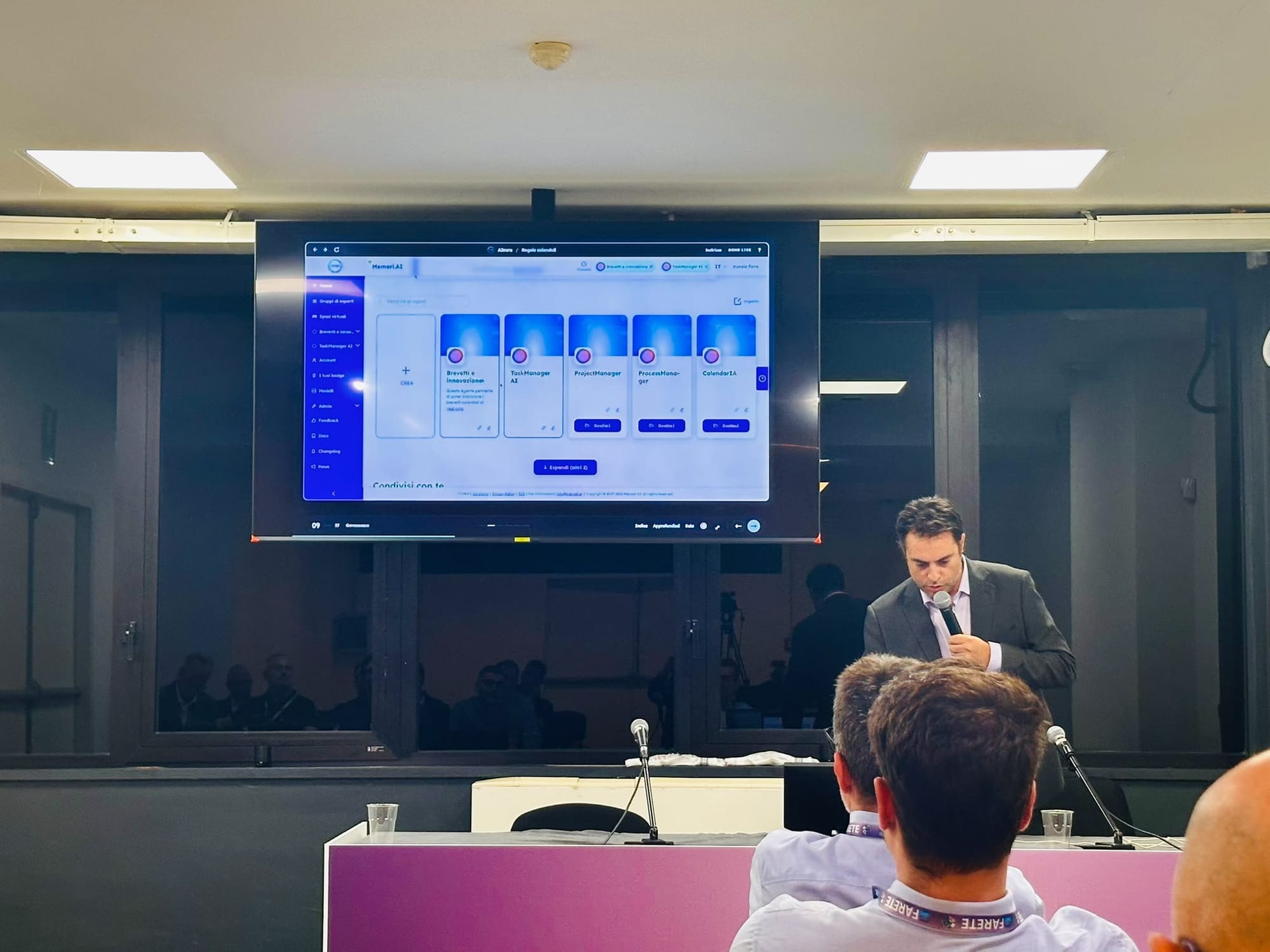
The demo portion made visible three aspects of governance in AIsuru: shared behaviors, access to systems, and documentation of the configuration.
Company rules inherited by agents
An administrator can define a rule, describe its rationale, assign it a category and establish which agents it applies to. Categories include behavior, compliance, data, security and style. The scope can include all agents or a selected set, with possible exclusions.
A simple example is requiring that, whenever a procedure is cited, the response indicate the document and version. The rule makes it easier to trace back to the source and verify it.
In the Memori tenant we showed a case related to patents: a rule that restricts handling this type of information with online models. The Brevetti e Innovazione (Patents and Innovation) agent is excluded from the scope because, in the configuration shown, it uses a Qwen model running on a Lenovo workstation in our offices.
The rule was also inherited by agents that already existed. In the test described during the workshop, TaskManager routed a request about patents to the dedicated agent, without requiring an individual change to its instructions.
Inheritance makes it possible to link an organizational decision to multiple agents. Instructions guide the model's behavior; access constraints and flow control must also be backed by permissions and architecture.
Enterprise MCPs: tools made available, credentials governed
MCP connectors allow agents to use tools and sources such as SharePoint, Outlook, ClickUp or a CRM. In AIsuru, IT can set up shared enterprise integrations and determine which agents or groups can use them.
Credentials remain under centralized management. Whoever builds an agent can enable the extensions made available without needing to receive the organization's keys. Revocation, too, can be managed centrally for agents that inherit that connection.
It's useful to distinguish three types of authorization: using an agent, using a tool through that agent, and performing a specific operation in the external system. For example, drafting an email in Outlook and sending it are different actions, which a process can assign to different people.
A snapshot for working on policies
When describing the use of AI in a company, references to the actual configuration are needed: agents, instructions, people, authorizations, rules, models and integrations.
The Policy section of AIsuru generates a dated snapshot of the tenant, i.e. of the organization's environment. The export collects a PDF of the tenant, a PDF for each agent, and the source Markdown texts. It includes configuration information and usage counts; it excludes conversation texts, credentials and secrets.
This material offers a concrete basis for whoever drafts or updates the policy. The company context, contracts and professional assessments complete the work: the snapshot documents the system at a specific point in time and must be updated whenever a new configuration needs to be represented.
Trust is also built through verifiable evidence
The governance journey also concerns Memori as an organization. In the FARETE materials we presented five ISO certifications referring to Memori S.r.l., under the declared scope «Software House Service»:
- ISO/IEC 42001, for AI management;
- ISO/IEC 27001, for information security;
- ISO/IEC 27017, for cloud service security;
- ISO/IEC 27018, for the protection of personal data in the cloud;
- ISO 9001, for quality management.
Alongside these are the NIS2 compliance attestation and the CASA AL1 application security assessment, documents of a different nature from ISO certifications.
This evidence describes management systems and controls in their respective areas. Work on each project continues through configuration, verification of results and the responsibilities of the organization that adopts it.
Academy and Retraining: skills that grow together with the tools
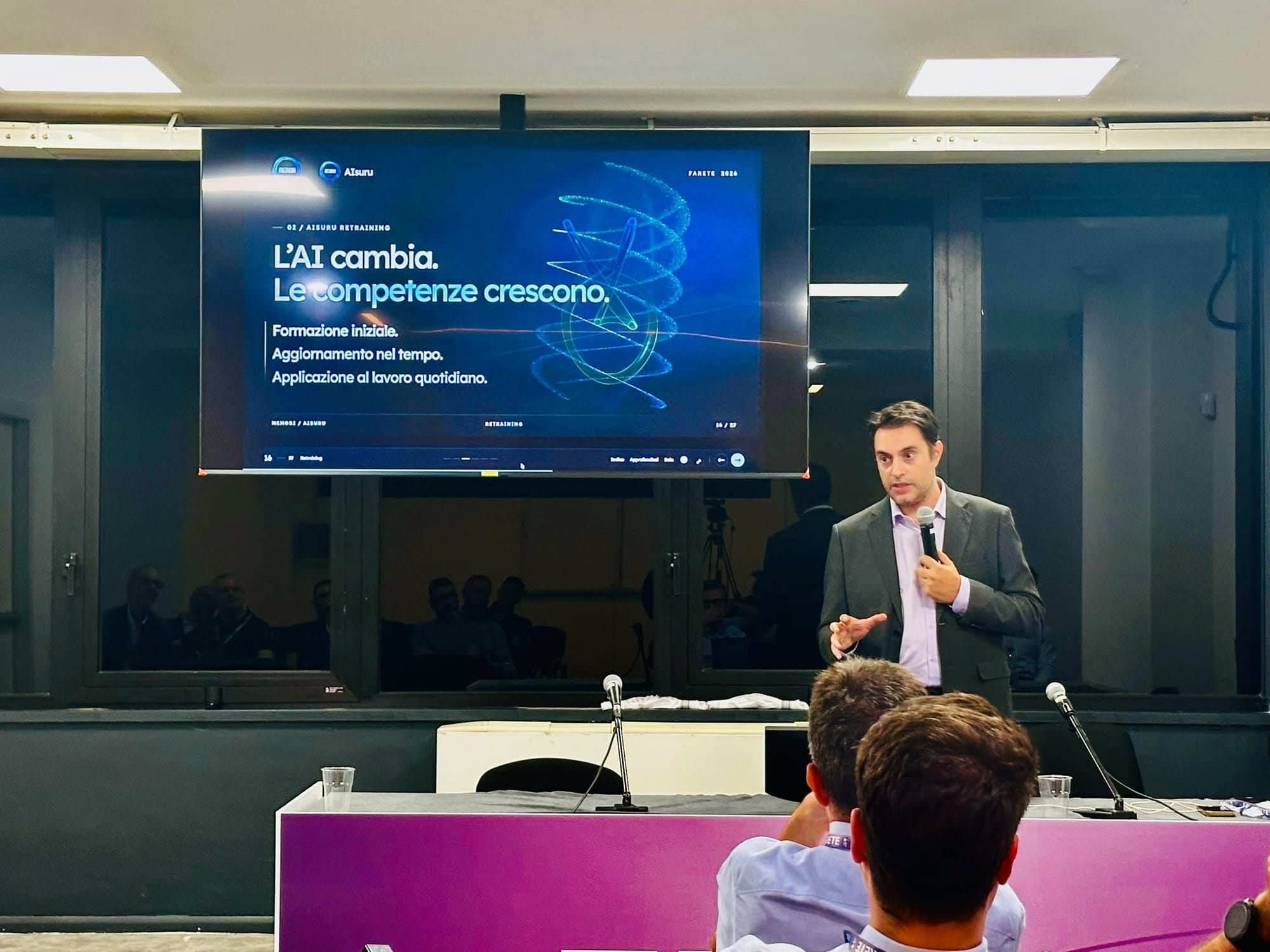
Adopting AI requires people capable of recognizing a suitable process, preparing sources, formulating requests and evaluating the result. Training is therefore part of the work from the very beginning.
With AIsuru AI Academy we bring these skills into hands-on workshops, where participants start building agents and connecting them to their own activities. Tiziana Tavella, COO of Memori and head of Academy and strategic clients, leads this accompaniment path.
To ensure continuity we presented AIsuru Retraining: an annual program with six bimonthly sessions dedicated to company champions and internal trainers. It includes updates on the AI landscape and the platform, review of training materials, and hands-on workshops.
Champions are internal points of reference who help colleagues, gather difficulties and bring new cases to the discussion. Everyday experience thus feeds back into training and helps keep it up to date.
In this context, Retraining refers to updating people's skills. The goal is to build autonomy within the organization and maintain a continuous link between learning, use and process improvement.
Mattia's case: documents, revisions and human approval
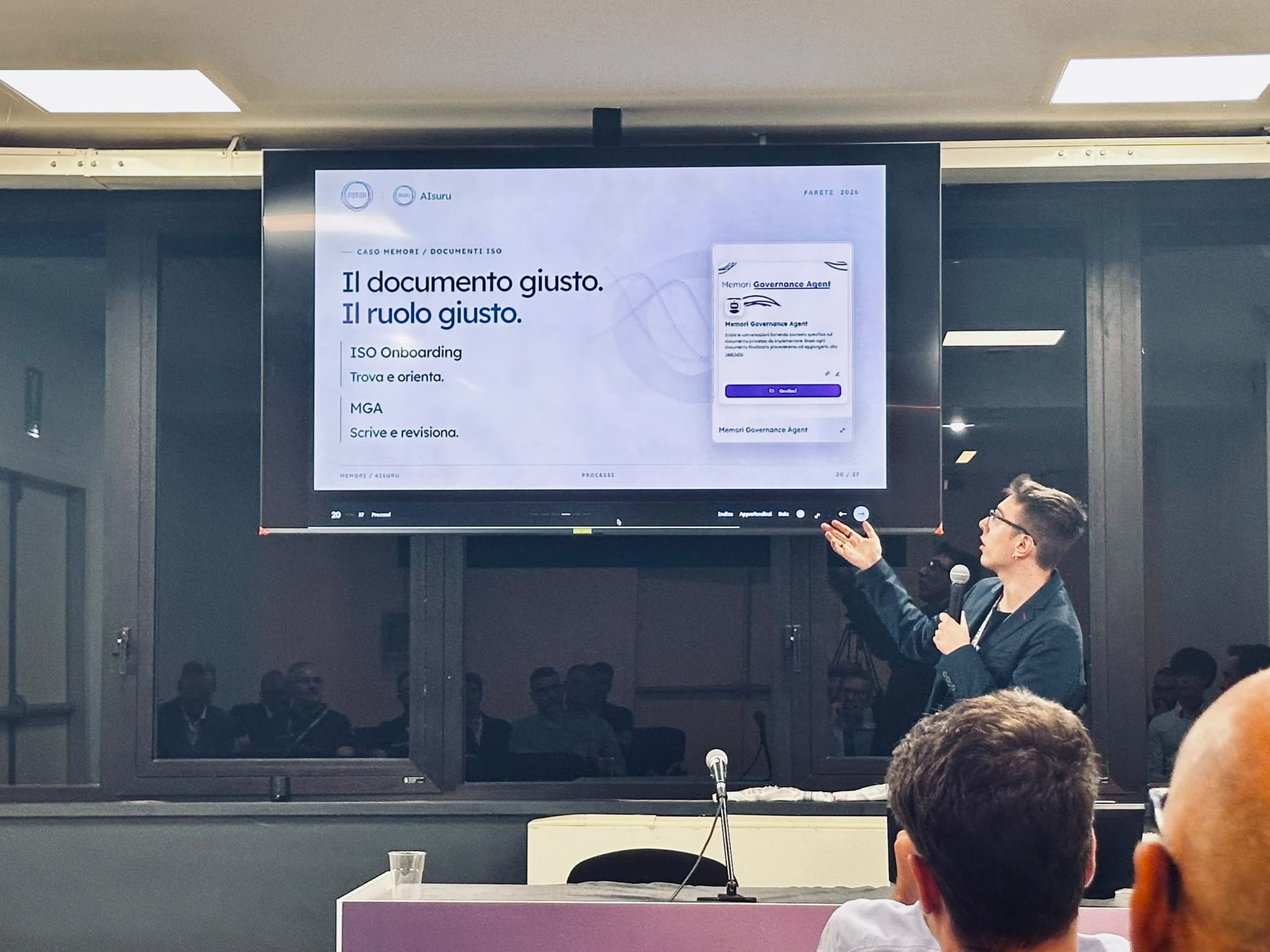
Mattia Bergami shared the origin of the Memori Governance Agent, or MGA, born out of an internal need: managing the documentation work related to the certification process.
Procedures, forms and policies need to reflect the organization, remain mutually consistent and stay up to date. Mattia, who mentioned during the talk that he doesn't have a technical background, built an agent and an application to support this work using AIsuru's tools.
In the demo he showed a precise flow. The document is uploaded or retrieved from authorized sources; the agent analyzes it and proposes changes through notes and comments in Word files. The person responsible for the review can evaluate, accept or reject them.
The app ISO Doc Reviewer makes the log, versions and statuses visible: the original document can be compared with the revised one, and the path to publication remains traceable. The link to SharePoint places the activity within the archive used by the team.
Scheduled activities add continuity. Mattia described, for example, a review of two documents every eight hours, followed by an email summary with proposed changes and open questions. In the flow described, publication on SharePoint happens after his approval. The operational log also allows activities to be consulted and exported.
Search, too, becomes part of the process. A person can ask which form to use to record the arrival of a computer or to update the org chart. ISO Onboarding helps navigate procedures and documents, while MGA supports work on content. Distinct roles make it clearer who to turn to and what kind of intervention to request.
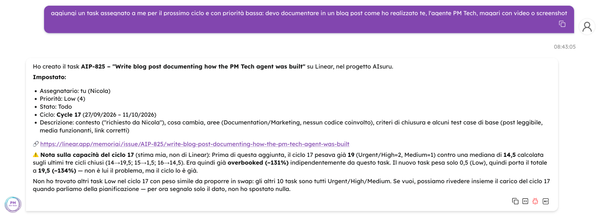
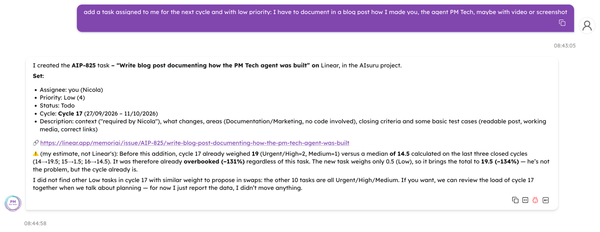
The application was developed with the help of AIsuru VibeCoder, by describing the desired flow and working together with company contacts and consultants. Knowledge of the process guided the construction of the tool.
Michele's cases: building agents and preparing emails with personal context
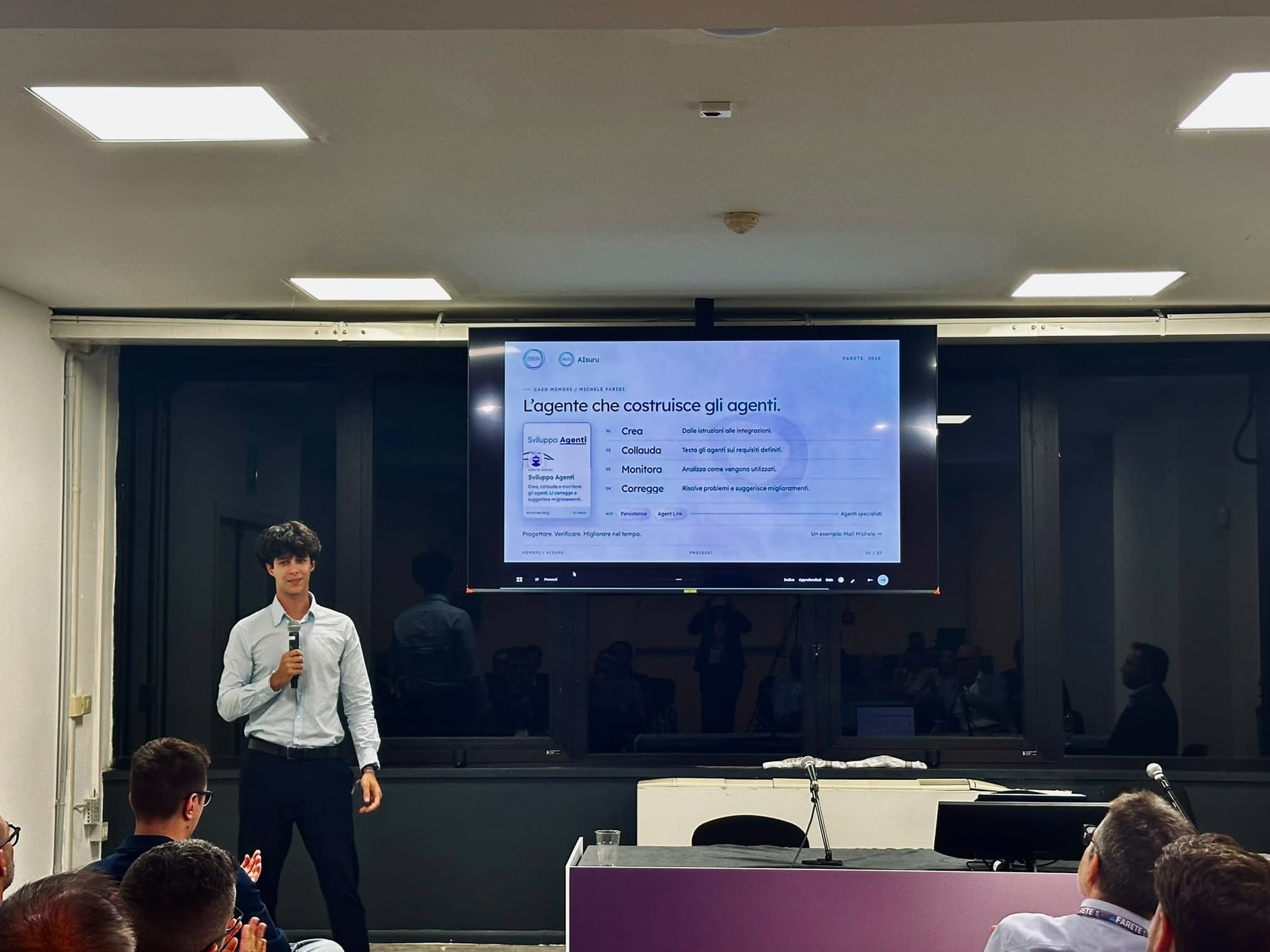
Michele Parigi presented two agents through one question: which activities are worth delegating to AI, and which decisions do we want to keep with people?
The first is called Sviluppo Agenti (Agent Development). It supports four activities: create, test, monitor and correct. It helps prepare instructions and integrations, checks behavior against requirements, and helps improve the specialist agents over time.
Persistence and Agent Link support the case, respectively for persistent context and for connecting with specialist agents. Collaboration is configured: exposing and linking a new agent also involves manual steps.
Michele's own work remains decisive in choosing the process, the purpose, the limits and the sources. Building an agent that helps him create other agents required him to make his own way of working explicit.
The second case is Mail Michele, introduced with a deliberately personal line: «It's not Copilot. It's Mail Michele.»
The message concerns the specific context of this agent, built around his sales work. The flow brings together three sources:
- sales tasks in ClickUp, indicating the activity to follow;
- threads in Outlook, which allow the conversation to be reconstructed;
- templates and real examples stored in Persistence, which offer references to Michele's tone and writing style.
The agent reads the context, chooses the relevant template and prepares the draft in Outlook. Michele checks, completes and sends it. The value of the case lies in the connection between activity, sales relationship and personal style; the reference to Copilot expresses this choice of personalization.
Michele's closing reflection runs through both examples: agents help carry out the how, while the person continues to define the what and the why. Purpose, quality criteria and responsibility guide the delegation.
Customer care: making experience reusable
The customer support case brought the workshop back to the opening line: «I've fixed it, try again.»
To support the team's growth we built an agent that monitors customer care emails, organizes information into a ticket database, and helps reconstruct the status of requests.
The volume of available emails, however, doesn't guarantee they contain the necessary knowledge. If a conversation only records that someone solved the problem, it's missing the step that would help whoever has to deal with it again.
So we worked on the process: describing the intervention, explaining how the solution was found, and collecting the customer's confirmation. The conversation thus leaves a trace that the agent can retrieve and make available to colleagues.
The work on connectors, also described through the contribution of CTO Nicola Zambello, extends the searchable context to knowledge of the platform's code. Support can therefore help reconstruct actions and reasons, based on the available sources.
For someone joining the team, this means having a reference point to explore past cases and prepare a response, alongside conversations with experienced colleagues. This is a goal that directly concerns onboarding and the distribution of knowledge.
Before assigning an activity to an agent, it is sometimes necessary to change the way it is documented. This is one of the most important pieces of work that emerged from the workshop.
AIsuru and Agents: from building to everyday use
When agents enter processes, there also needs to be an understandable access point for the people who have to use them.
On AIsuru you create, train and maintain agents. Through Agents we distribute them inside and outside the company.
Agents is the Memori portal where colleagues, customers and external organizations can find the agents available to them, understand their purpose and start using them according to their authorizations. Building, sources, integrations and rules remain governed in AIsuru.
In the portal shown during the FARETE presentation, agents are organized by area: compliance and regulation, sales, processes and projects, assistants. Memori Governance Agent and Brevetti e Innovazione sit alongside specialists such as Pablo, ProjectManager, TaskManager AI, ProcessManager, CalendarIA and Registro Incontri Team (Team Meeting Log).
An example of external distribution is ID registration, described during the workshop for work with resellers. The agent supports registering customer opportunities and accessing up-to-date documentation, helping coordinate the sales channel.
The principle is to make knowledge usable by the people entitled to it. Catalog, identity and authorizations must be consistent with the access rights of the agent and the connected systems.
A team of specialists and a look ahead at collaboration
The final overview showed just how varied the tasks assigned to agents can be. Outreach Farete prepares invitation drafts based on researched information; Pablo supports sales activities; File Piattaforme 2026 cross-references consumption, configurations and contracts; On-prem helper provides guidance on installation documentation; PM PROGETTO supports work on client projects. Other agents support communication, training and internal organization.
Each case has an owner, a goal and a set of tools. Collaboration between specialists arises from configured connections and assigned permissions.
The topic of meetings also offered a glimpse of future development. It is already possible to configure an agent that gathers availability via email and moves forward with organizing a meeting. Nunzio then described a further perspective: personal agents that coordinate directly with each other, taking into account calendars, preferences and each user's rules.
This second part is a direction for future development. Achieving it requires extending to exchanges between agents the same work on identity, access and responsibility applied to individual processes.
Where to start
The discussion at FARETE made clear that preparing the process determines the quality of the delegation. Sometimes sources are already organized; other times documentation lives mainly in a person's memory. In these cases, gathering and structuring that knowledge is the first step.
To get started, we work with companies on five elements:
- The activity: what work we want to support and where those who do it today run into difficulty.
- The sources: which documents, data and examples are needed and how up to date they are.
- The actions: which systems need to be connected and with what permissions.
- The responsibilities: who maintains the agent, who verifies the results and who approves the relevant steps.
- The evaluation: how to observe quality, time, errors and usefulness within the context of the process.
From here a pilot case is built, its behavior is verified, and a decision is made on how to extend it. Training accompanies the journey, while rules and architecture define the operational boundaries.
This is the work we are doing inside Memori too. Every agent asks us to better understand an activity, make the necessary information explicit, and more precisely choose the contribution of people.
Thanks to Massimo Chiriatti for his contribution on sovereignty, to Mattia Bergami and Michele Parigi for the cases they shared, to Tiziana Tavella, to the AI Creators and to the whole Memori team. Thanks to Confindustria Emilia Area Centro and to everyone who took part in the workshop, continuing the conversation even after the presentation.
To learn more about AIsuru, Agents, Academy and Retraining, or to request a demo dedicated to your organization's processes, write to presales@memori.ai.